

Research Fellows Winter Term 2026-2027
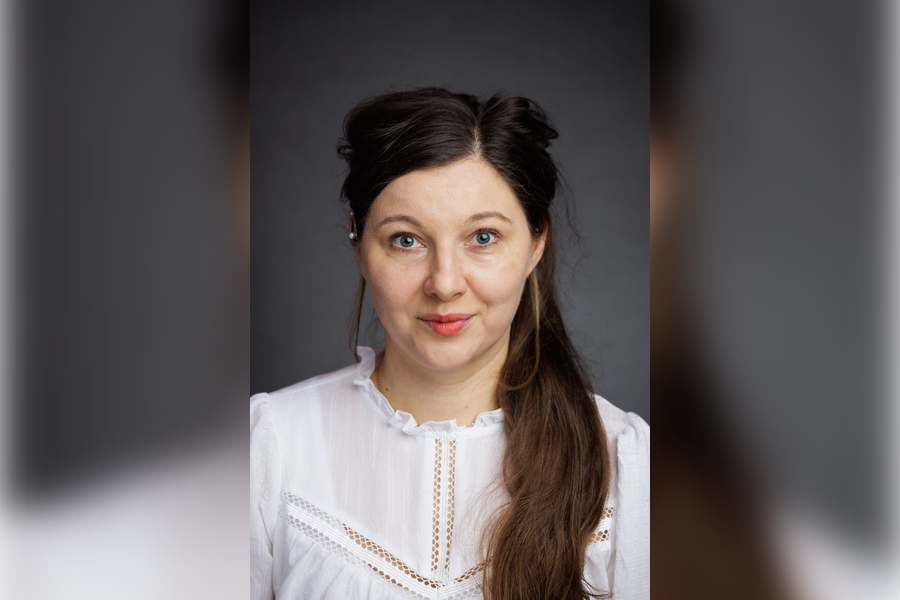
Cornelia Baciu
International Studies Association
Dr. Cornelia Baciu is a postdoctoral researcher at the Cluster for European Research at Saarland University (UdS). Before joining UdS she was Researcher at the Centre for Military Studies, Department of Political Science, University of Copenhagen.
Shaped by an interdisciplinary academic background and experience across diverse academic environments, Cornelia Baciu’s research focuses on the expressivist dimensions of international relations and the production of ontological security. Her current research project examines responses to Russia’s war of aggression against Ukraine in the fields of security policy and international criminal law.
Cornelia Baciu is a member of COST Action CA23129 – Peace Research Community Europe and member in the YAC Research Theme ‘The Good Life-What makes a Good Society’, University of Freiburg.
KIU research project:
My research explores how wartime societies exercise agency through war memorialization in Ukraine, asking how memorials shape justice, memory, and future peace. Drawing on field research and interviews in Kyiv and Lviv, the project argues that memorials are not merely commemorative objects but active sites where collective identity, public memory, and visions of justice are continuously (re-)constructed. The project contributes to debates on transitional justice by the novel concept of expressivism. I posit that expressivism marks an emancipatory function of aesthetics. In the case of war memorials, expressivism operates through a synaesthetic phenomenon. Memorials therefore become spaces where loss is not only remembered but also transformed into sources of agency, ontological security, and renewal.
Research interests:
- norm expressivism
-
ontological security
-
conflict and post-conflict reconstruction in Ukraine
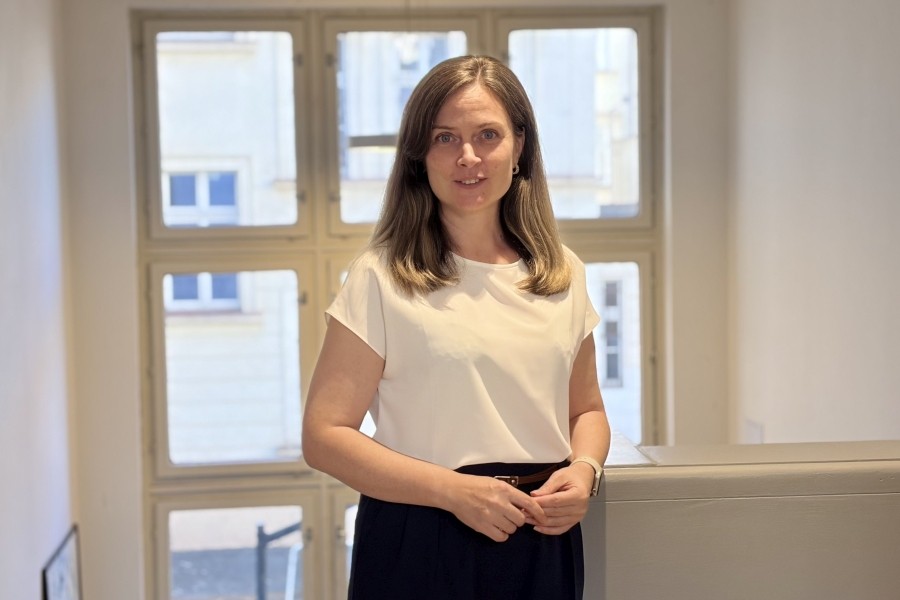
Alina Boiko
Adriana Vanchak
Alina Boiko, DSc, LL.M., is a Ukrainian economist, researcher, and policy expert working on economic resilience, governance, and institutional change in wartime and reconstruction contexts. Her academic career spans economics and public administration, including as Professor at the State University of Trade and Economics in Kyiv. Her work combines academic research with applied policy analysis. She is Founder and Executive Director of the Economic Resilience Institute, Ukraine. Her international experience includes leading and delivering research and policy projects with Ukrainian public institutions and international organisations, alongside research fellowships in the United States and the Czech Republic.
KIU research project: ‘Governing Ukraine’s Post-war Transition: From Wartime Economic Resilience to Just Reconstruction’
Ukraine’s wartime economic resilience has relied on new forms of coordination between the state, business, and society. Yet governance arrangements effective under conditions of existential crisis may not necessarily provide an appropriate institutional basis for reconstruction. The project investigates this transition from a political economy perspective, examining which wartime mechanisms should be preserved, adapted, or replaced. Drawing on qualitative evidence from Ukraine and policy analysis, it seeks to identify how wartime governance can contribute to reconstruction that combines economic effectiveness with inclusion, institutional accountability, and democratic legitimacy.
Research interests:
-
economic resilience and business adaptation
- governance and institutional transformation
- recovery, reconstruction and European integration
Guénola Inizan

Viadrina
Guénola Inizan specializes in urban, social, and political geography. She earned her PhD in Geography and Urban Planning from Lumière Lyon 2 University in 2024. Since then, she has held several research fellowships, including at the University of Łódź and the Leibniz Institute for Regional Geography in Leipzig. During these postdoctoral fellowships, she has conducted research on the Russian occupation of Ukraine through the lenses of urban planning and housing policies.
KIU research project:
This research examines the transitional justice challenges surrounding housing confiscations in Russian-occupied territories of Ukraine. Homes temporarily abandoned by residents fleeing war or occupation are declared ‘ownerless’ and may be confiscated under the ‘legal’ framework imposed by the Russian occupation authorities. The study explores how this specific harm can be documented, recognized, and compensated, and examines the actors and judicial and non-judicial mechanisms involved. Using a geo-legal approach, it combines document analysis and interviews with NGOs and Ukrainian institutions.
Research interests:
-
urban studies, social and political geography
-
housing policies, demolition and reconstruction
-
Russia, Ukraine, Ukrainian temporarily Russian-occupied territories
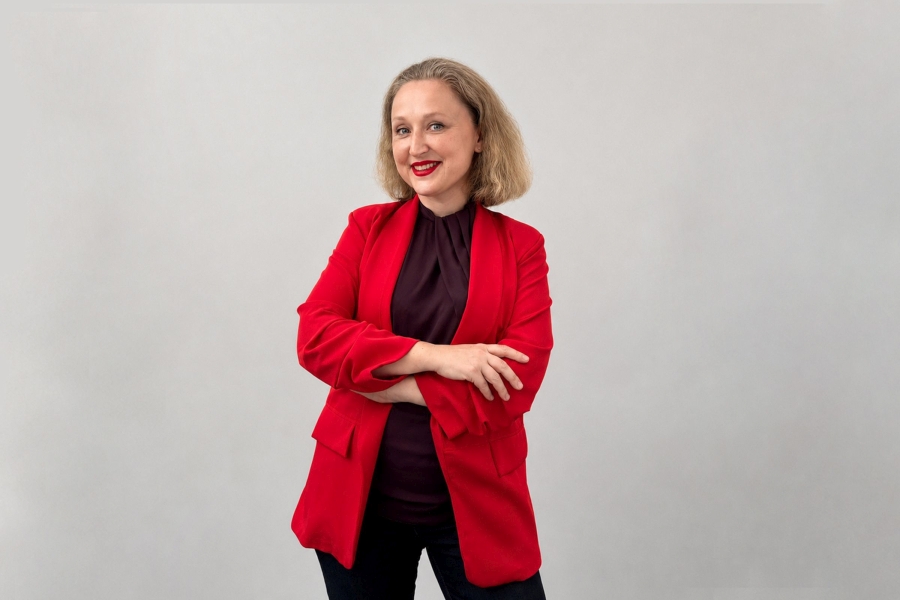
Maryna Kalashlinska
Maryna Kalashlinska
Maryna Kalashlinska is a Ukrainian political scientist, lawyer and postdoctoral researcher affiliated with Vasyl’ Stus Donetsk National University. She holds a PhD in Political Science and degrees in law and public administration. She has taught International Relations at Maria Curie-Skłodowska University in Lublin and works at the International Cooperation Center of the Lublin Municipal Office, where she supports city diplomacy and Polish-Ukrainian institutional cooperation. She is also a permanent court mediator in Lublin. Her research focuses on disinformation, public meaning, political communication, hybrid conflict, territoriality and Polish-Ukrainian relations.
KIU research project:
This project examines how Ukrainians affected by Russia’s war are reframed in Polish public and digital debates. It focuses on narratives that shift attention away from Russian aggression and present Ukrainians as responsible for the war, as dragging Poland into the conflict, as unfairly privileged, ungrateful, historically guilty, or undeserving of further support. Through selected public debates, the project traces how these narratives challenge the recognition of Ukrainians as war victims and may weaken public support for solidarity with Ukraine and accountability for Russian aggression.
Research interests:
- disinformation, public meaning-making and political communication
- digital media, hybrid conflict and information warfare
- international relations, migration and Polish-Ukrainian relations
Nadiya Kiss
PicturePeople Wiesbaden
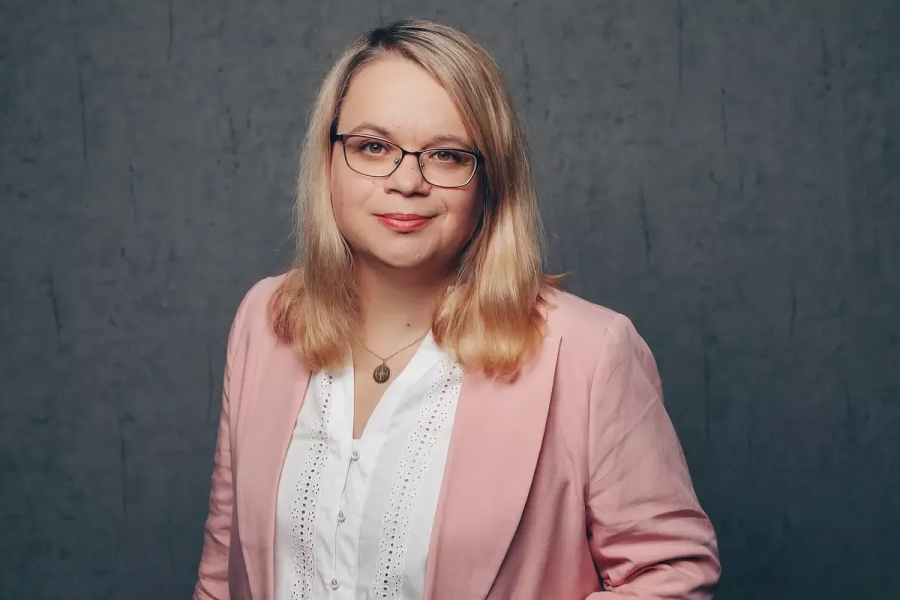
Nadiya Kiss is a sociolinguist with a focus on language policy, minority languages and interrelations between language and migration. Previously, she worked as a Gerda Henkel Fellow at the University of Erfurt, a postdoctoral researcher at Justus-Liebig University of Giessen, and as a lecturer and an associate professor at the National University of Kyiv-Mohyla Academy. She is a co-editor of two collective volumes - Contested Language Diversity in Wartime Ukraine. National Minorities, Language Biographies, and Linguistic Landscape (Ibidem Verlag, 2025) and Languages in Conflict and War. Ukraine, the Caucasus, and the Baltics (Palgrave MacMillan 2026).
KIU research project: ‘The Right to Speak: How Displaced Crimean Tatar Communities Respond to Linguistic Injustice and Dispossession’
Based on the interview narratives, the project explores the role of identity in the process of transitional justice within Crimean Tatar communities abroad and in mainland Ukraine, and how it intersects with other factors, such as language, religion, and intergenerational memories. This maintenance and transformation of identity can be considered a response to different types of dispossession and loss, as well as a coping mechanism in the context of full-scale war. For analysing the data, tools of reflexive thematic analysis and a decolonial lens are used, including such concepts as the coloniality of knowledge, epistemic injustice, cultural erasure, and abrogation.
Research interests:
-
narratives of forced migration
-
language and identity interrelations
-
linguistic and epistemic justice
Tamás Lattmann
Tamás Lattmann
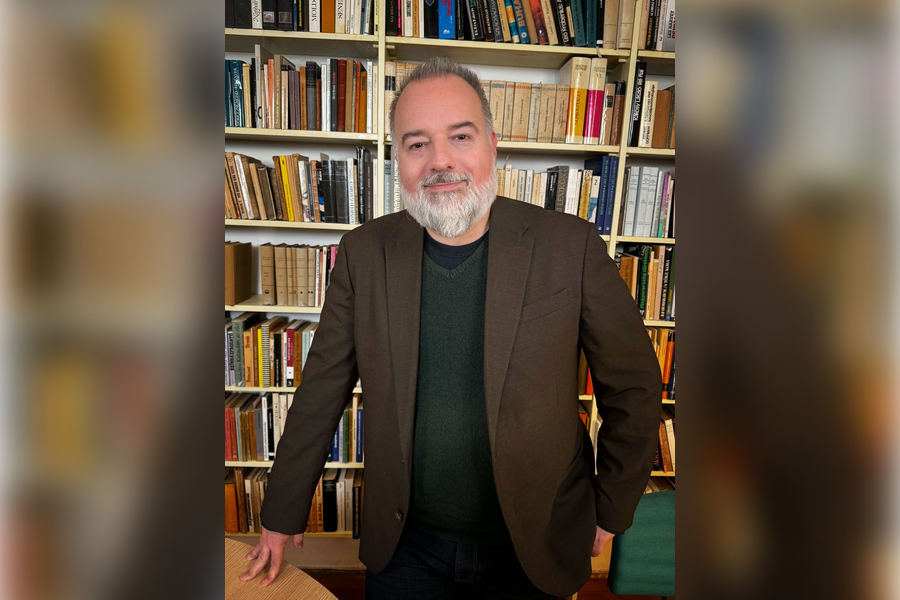
Tamás Lattmann (JD PhD) is currently the head of Department of Social Sciences and an associate professor at Tomori Pál College (Budapest). Earlier he has been teaching at the University of New York in Prague, ELTE Faculty of Law and Miklós Zrínyi University of National Defence / National University of Public Service (Budapest), he was working as a senior analyst at the Center for European Progression (Brussels), as a researcher at the MTA-ELTE NATO Information and Research Center (Budapest) and the Institute of International Relations (Prague).
KIU research project: ‘Implications of the Ukraine War on International Criminal Law: Reassessing Institutional Framework, Jurisdiction and the Future of International Criminal Justice’
While international criminal law has progressively evolved since the creation of the ad hoc international tribunals and the International Criminal Court in the 90s through judicial practice, state cooperation, and institutional development, the full-scale invasion of Russia against Ukraine in February 2022 has fundamentally challenged the effectiveness of the existing accountability mechanisms, leading to looking for old-new ways of holding individuals accountable for grave violations of law. Additionally, the conflict has revived debates related to international criminal law both doctrinally and institutionally. The research examines the effectiveness of existing accountability mechanisms, analyses jurisdictional challenges confronting the ICC and ideas of new tribunals.
Research interests:
-
public international law and transferred sovereignty
-
international humanitarian law, human rights and international criminal law
-
European Union constitutional law
Viktor Ruban
Marco V. Pereira
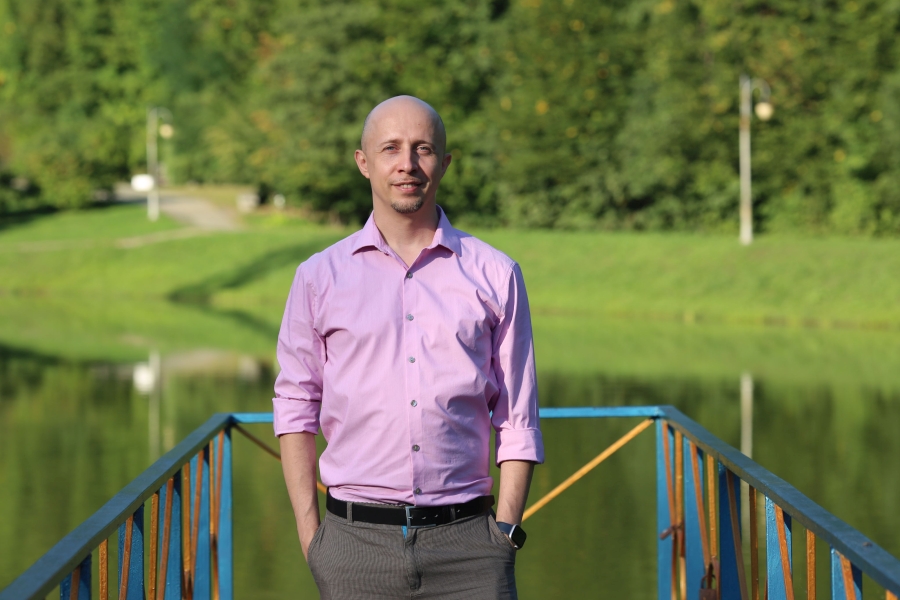
Viktor Ruban is a Ukrainian researcher, movement-based artists, curator, art-therapy educator and cultural activist with a PhD in Cultural Studies. He teaches at the National University of Ukraine on Physical Education and Sport and was Valeska Gert Guest Professor at Freie Universität Berlin in 2024-2025. His research examines contemporary dance, embodied knowledge, cultural memory, and institutional development. He is Director general of Ruban Production ITP, co-founder and Programme Director of the Impulse Transformation Platform, initiator of Tanzplan Ukraine and Multimodal Recovery all-Ukrainian initiatives. He is an IETM Global Connector 2026 and a Ukrainian representative in the European Cultural Parliament.
KIU research project: ‘Embodied Memory and Collective Identity: Oral History, Dance, and the Reconfiguration of Ukrainian Cultural Heritage in Times of War’
The project investigates dance as embodied memory and as a medium through which collective identity is reconfigured in Ukraine amid war, displacement, and transnational mobility. Combining cultural studies, dance studies, memory studies, and heritage studies, it uses oral history interviews, embodied analysis, discourse analysis, and comparative research to examine how bodily practices preserve social experience, trauma, resistance, and cultural continuity. It also explores how oral history can expand approaches to intangible cultural heritage, including minority and marginalised experiences, and how war reshapes narratives of the body, memory, and heritage. The project will produce a methodological model and an academic article.
Research interests:
-
dance and performance studies: embodied knowledge, somatic practices, and contemporary choreographic culture
-
dance heritage and cultural memory: oral history, archiving, and re-enactment practices
-
institutional development, cultural policy, and international cooperation in dance and the performing arts
Kateryna Shunevych
Kateryna Shunevych
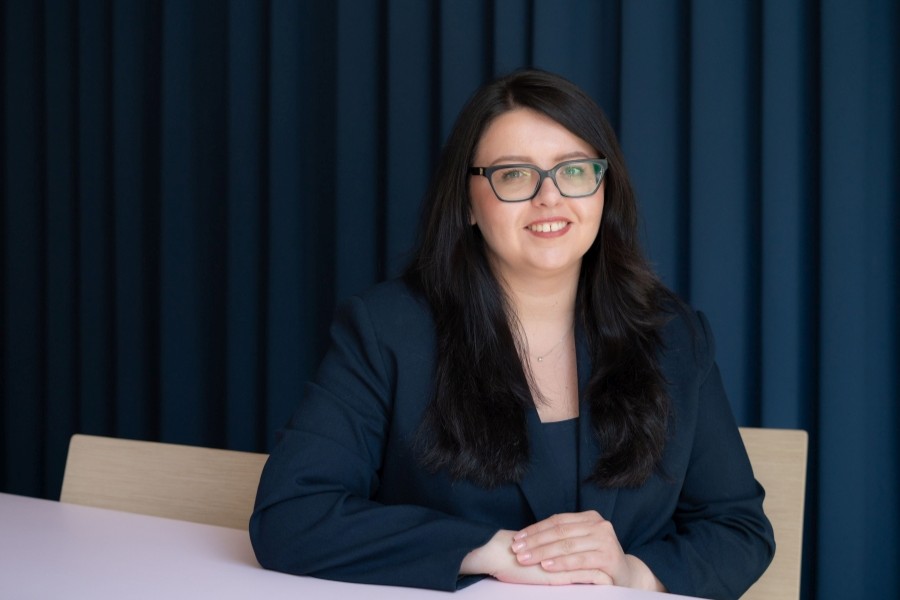
Kateryna Shunevych, PhD in Law, specializing in comparative forensic examination in criminal proceedings in Ukraine and Europe. Since 2020, head of the Analytical Center of JurFem within the Association of Women Lawyers of Ukraine ‘JurFem’. From 2021 to 2026 - Lecturer Assistant at Ivan Franko National University of Lviv (Faculty of Law). Since September 2026, - Senior Lecturer at Ukrainian Catholic University (Faculty of Law). My academic and professional work focuses on criminal justice, gender-sensitive approaches to law and justice, and accountability for international crimes.
KIU research project:
My KIU research project examines the capacity of Ukraine’s national legal system to deliver justice for international crimes through a victim-centred transitional justice perspective (focusing CRSV). It focuses on two interconnected dimensions: the implementation of victims’ procedural rights in criminal proceedings, particularly for survivors of conflict-related sexual violence and other vulnerable groups, and the use of in absentia proceedings in prosecuting international crimes. Combining doctrinal legal research with qualitative empirical analysis and comparative insights, the project assesses how Ukraine can balance accountability, victims’ rights, fair trial guarantees, and the rule of law while developing a sustainable transitional justice framework.
Research interests:
-
criminal procedure and accountability for international crimes
-
victim-centred transitional justice and gender-sensitive approaches to justice
-
comparative and international criminal law, including in absentia proceedings
John Vsetecka
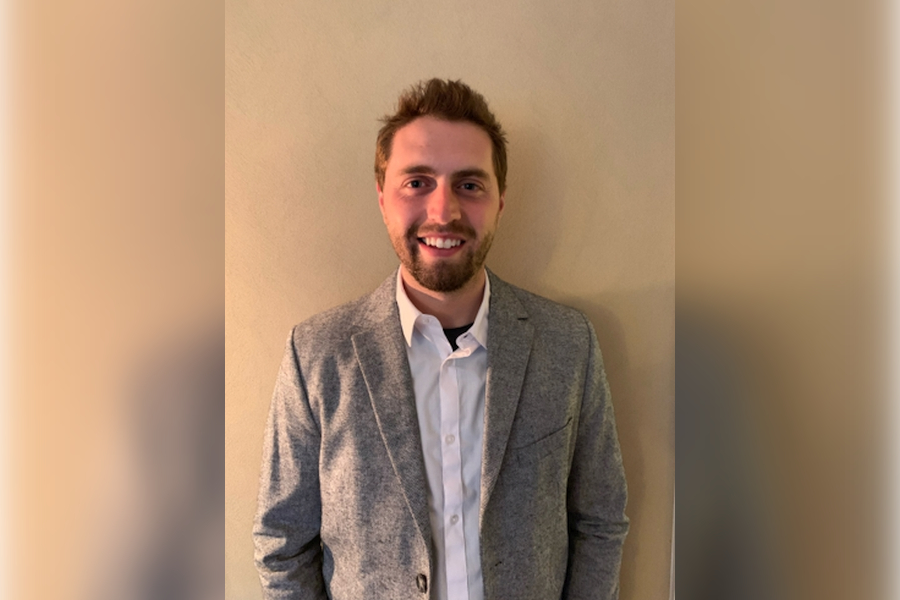
John Vsetecka
John Vsetecka is Assistant Professor of History at Nova Southeastern University in Fort Lauderdale, FL. His research and teaching focus on topics of famine, mass violence, and transitional justice in eastern Europe, especially Ukraine. He earned his Ph.D. in history from Michigan State University in 2023 and held the Jaroslaw and Nadia Mihaychuk Postdoctoral Fellowship in Ukrainian Studies at the Harvard Ukrainian Research Institute (HURI) from 2023-2024. John is also the founder and editor of H-Ukraine (part of the larger H-Net platform) that shares and promotes scholarly content related to the study of Ukraine.
KIU research project: ‘‘In Order to Expand the World’s Knowledge’: Investigative Famine Commissions, Transitional Justice, and Ukraine during the Late Cold War’
This project examines how two investigative famine commissions, The U.S. Commission on the Ukraine Famine and the International Commission of Inquiry into the 1932-1933 in Ukraine, were central to the global development of the ‘Age of Transitional Justice’. This research highlights how the commissions’ work was a catalyst for both international and domestic transitional justice efforts inside and outside of Ukraine during the late Cold War and assisted Ukrainians in confronting the legacy of the Holodomor using various restorative justice measures.
Research interests:
-
famine
-
mass violence
-
transitional justice