

Academic Publications
Academic Publications
This section provides an overview of external publications featuring contributions from KIU fellows, member institutions and partners in the interdisciplinary study of Ukraine.
 © Photo: Vincent 2025 / Patch of the group ‘Library Spiders’
Abstract:
This essay examines how Ukrainian civil society has developed since the beginning of Russia’s full-scale war of aggression. Taking as starting point the history of Ukrainian civil society in the context of the three revolutionary cycles as well as drawing on the analytical concept of resilience, the text addresses the question how Ukrainian civil society can uphold the classic functions of securing democratic norms, building a sense of community, and producing abstract solidarity while contributing towards transformative resilience. Six directions in which Ukrainian civil society has developed are identified, all of which relate specifically to the war in terms of their emergence and impact. The analysis highlights how Ukrainian civil society has actively been ‘doing resilience’ during the war and thus making its mark on society beyond the war itself.
Research Journal Social Movements, Volume 39 Issue 1; DOI: 10.1515/fjsb-2026-0003.
Abstract:
Can civil spheres extend beyond the nation state? This question lies behind the essay written by Jeffrey C. Alexander that reconstructs ‘The civil sphere in war and peace: From Athens to Kyiv’. This article argues that the twenty-first century and the Russian war of aggression against Ukraine teach us that freedom and democracy, but also war and trauma, are intricately entangled with both nation-bound and transnational civil spheres in wartime Europe. Uncivil events such as war and trauma can give rise to civil spheres, which remain fragile and vulnerable if not safeguarded by institutions. Ukraine's defence, resilience and solidarity, however, show that civil spheres can extend beyond the nation state – and that civil sphere theory could be at the nucleus of a contemporary sociology of international relations and transnational complexity.
Research Journal Dialogues in Sociology; DOI: 10.1177/29768667261420951.
 © Screenshot: Ukrainian Analytical Digest
Abstract:
The Russian war of aggression against Ukraine is the most documented war in history. While there is broad and detailed information on the course of the war, its consequences and the multifold forms of Ukrainian resistance in the occupied territories remains far less explored. Collecting data in these regions is difficult and extremely dangerous for both researchers and informants. Drawing on open-source data, this article adopts a holistic approach to Ukrainian resistance by examining three major forms: civil non-violent resistance, armed (lethal) resistance, and digital resistance, which often operates as an intermediary between the two.
DOI: 10.3929/ethz-c-000795781#
READ THE FULL TEXT: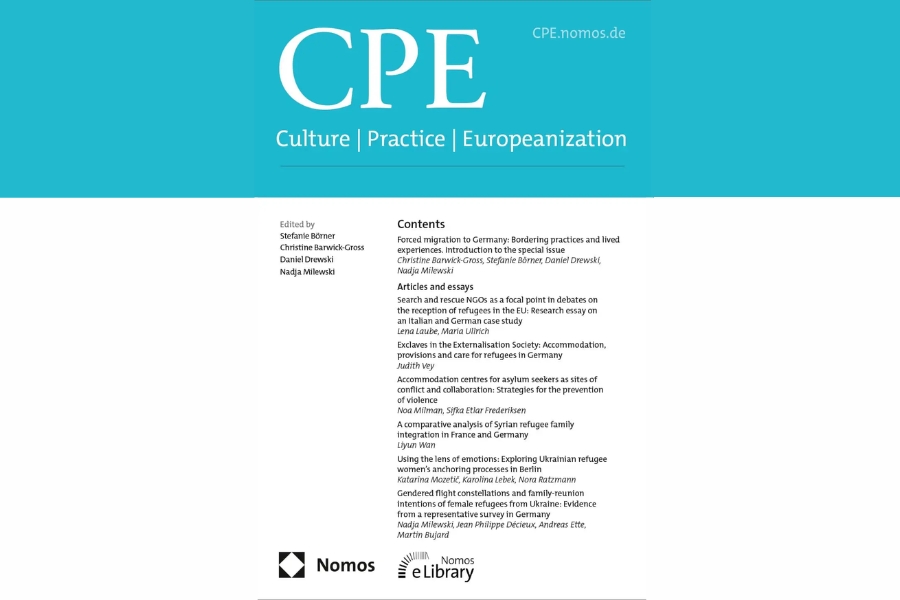 © Screenshot: Nomos Verlag / Inlibra
Abstract:
This article analyses Russia’s war against Ukraine according to the criteria of a singular crisis as formulated by Kraemer and Steg (2025), combining this approach with Charles Tilly's persective on crises, conflict and contentious politics. The article argues that the singular character of any crisis is strongly influenced by its spatial, temporal, and factual dimensions, which can blur the boundaries between crisis, normality, and ‘new normality’. Finally, it states that crisis response and the concept of resilience are also contingent and need to be integrated in our understanding of singular crises.
Culture, Practice & Europeanization (CPE), 10 (1) 2025, pp. 27 – 46; DOI: 10.5771/2566-7742-2025-1-27.
READ THE FULL ARTICLEAbstract:
What is the ‘Russian World’ – russkij mir – and how is it understood today from a Ukrainian perspective? Officially, this doctrine is built on a mix of shared language, culture, Orthodox Christianity, historical memory, and reverence for the so-called ‘Great Patriotic War’, often framed as the Soviet Union’s greatest victory. In Ukraine, this ideology has taken on a very different meaning in the shadow of the full-scale Russo-Ukrainian war. Ukrainian officials draw on powerful imagery to make sense of violence, occupation, and loss – and to challenge the narratives coming from Moscow.
Abstract:
Yermolenko, A. (moderator), Gardashuk, T. (moderator), Remezova, O., Havryliuk, R., Hutsalenko, O., Kisselyova, O., Karachevtseva, L., Boichenko, N., Karpenko, K., Gomilko, O., Biriuk, N., Vatsyk, Yu., Balinchenko, S., Adamenko, B.
This issue of the Philosophical Thought journal is dedicated to the interdisciplinary study of the environmental impact of war on humans and society. It contains materials from the roundtable discussion, 'War and the Environment: Ecological, Ethical and Anthropological Dimensions', which took place on 28 March 2025 at the H. Skovoroda Institute of Philosophy, National Academy of Sciences of Ukraine (moderators: Anatoliy Yermolenko, Corresponding Member of the National Academy of Science of Ukraine, Director of the H. Skovoroda Institute of Philosophy; Tetiana Gardashuk, Doctor Hab. in Philosophy, Head of the Department of Logic and Methodology of Science) and thematic articles.
The roundtable, which brought together philosophers, natural scientists, and other humanities experts, provided an opportunity for a broad dialogue to find answers to today's challenges. It also allowed for a deeper understanding of how war transforms the environment, the value system, and the very essence of man. The discussion covered direct and indirect environmental damage (destruction of ecosystems and habitats, natural resources, agricultural lands, pollution, and climate change) and anthropological transformations caused by war, as well as ethical, philosophical, and artistic reflections on these issues. The impact of the war on the geological environment and the country's mineral resources was highlighted. The importance of evaluating these resources for the country's socio-economic potential and post-war rebuilding was emphasized. One of the central issues was the impact of Russian aggression on Ukrainian identity, particularly in terms of destructive environmental changes. Other issues included the moral and ecological dimensions of war, and rethinking ecocide as an ethical and existential catastrophe, as well as ways to confront it. It was also noted that nature is not only a 'silent victim' of war, but also a witness to tragic events, which leaves a unique imprint on the landscape of our memory.
Participants also expressed their support for holding regular roundtable discussions on the topic of ‘War and the Environment’.
Article:
The article is analyzing the environmental impacts of full-scale Russian aggression in Ukraine within the framework of modern approaches to assessing the war-environment interaction. This includes the concept of ecocide as the widespread, long-term, and severe damage to the natural environment.
The particularities of the current Russo-Ukrainian war are its hybrid character and scale, vast targeting of industrial and agricultural infrastructure, as well as weaponization of different kinds of resources and civilian nuclear facilities. Special attention is paid to the analysis of new threats of nuclear disaster resulting from the Russian occupation of the Zaporizhzhia Nuclear Power Plant (ZNPP) and attacks on other civilian objects, which match nuclear terrorism and violate the principle of nuclear taboo (Nina Tannenwald), inducing nuclear fear. Such a fear is considered an expression of solidarity with all life forms threatened by nuclear disasters (Ulrich Beck). Russian nuclear terrorism is a speculation on nuclear fears and an exploitation of this feeling. Hans Jonas’ heuristics of fear could be a clue to transform the fear into effective actions to stop Russian aggression, nuclear blackmail, and terrorism.
Abstract:
Die Beiträge dieses Sammelbandes sind von ausgewiesenen ExpertInnen der politikwissenschaftlichen Osteuropaforschung formuliert und bieten einen umfassenden Überblick über die politische Geschichte der Ukraine. Die AutorInnen analysieren dabei das Spannungsverhältnis zwischen (Re-)Demokratisierung und (Re-)Autoritarisierung sowie die markanten politischen und wirtschaftlichen Fortschritte seit der Euromaidan-Revolution. Das Buch bietet spannende Einblicke in das Zusammenspiel von politischen Institutionen und Parteien, Zivilgesellschaft und politischen Eliten sowie unterschiedlichen territorialen und wirtschaftlichen Interessenkonstellationen im Zuge des hindernisreichen postkommunistischen Transformationsprozesses und europäischen Integrationsprozesses der Ukraine. Die AutorInnen analysieren darüber hinaus gegenwärtige Entwicklungen in vier kritischen Politikfeldern: Wirtschaftspolitik, Bildungspolitik, Sozialpolitik und Energiepolitik. Mit seinem bewussten Blick auf innenpolitische Dynamiken zeigt das Buch, dass die moderne Ukraine viel mehr ist als nur ein Schlachtfeld geopolitischer Ambitionen: Sie ist eine europäische Kulturnation mit einer mitreißenden und herzergreifenden Vergangenheit – und Gegenwart –, die trotz unzähliger tragischer Episoden von einem bewundernswerten Überlebens- und Demokratisierungswillen und einzigartigen politischen Dynamiken geprägt ist.
Access via Springer Professional
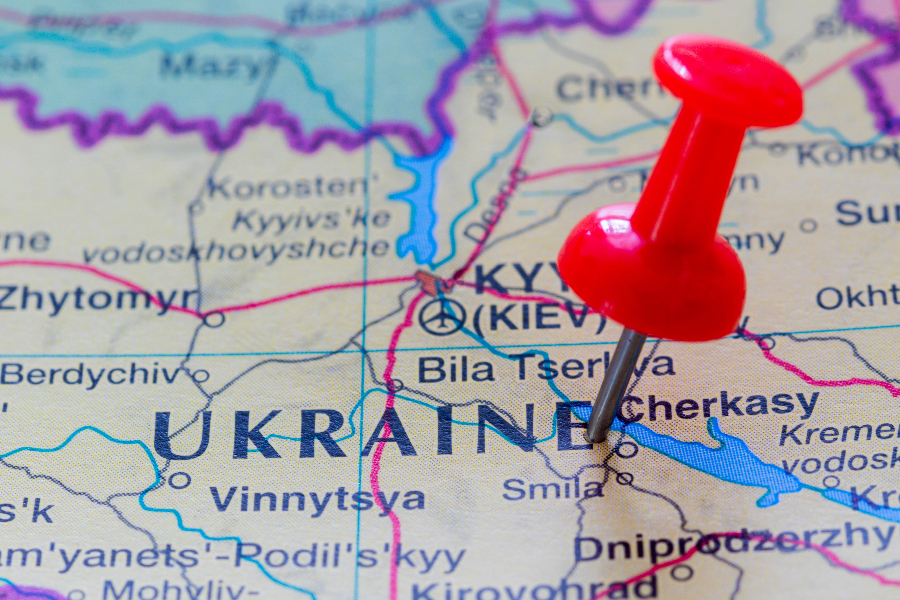 © Photo: IMAGO / Pond5 Images
Abstract:
For a long time, Ukraine was overlooked, underestimated and misunderstood in Germany. The Russian war of aggression from 2022 onwards finally brought attention to the country, showing that structured, visible and permanently funded research on Ukraine is needed.
Abstract:
Man kann die postsowjetische Periode 1989–2022 bereits heute als eine eigenständige, ja sogar prägende Epoche der modernen Weltgeschichte betrachten. Sie resultierte aus dem spektakulären Ende des Sowjetsystems und endete mit der Großinvasion Russlands in der Ukraine. Diese gut dreißigjährige Ära eröffnete den Völkern Osteuropas und Nordeurasiens eine einzigartige Möglichkeit, Freiheitsformen selbst zu gestalten und eigene schöpferischen Potentiale zu erproben. Eine weitere Besonderheit der postsowjetischen Epoche in ihrem Raum war, dass sie – im Gegensatz zur Zeit der Russischen Revolution und des Bürgerkriegs 1917–1924 – nur eine vergleichsweise geringe Zahl an Toten forderte. Stattdessen unternahmen die Bürger der UdSSR-Nachfolgestaaten den Versuch, freie Politik und Wirtschaft zu etablieren sowie kollektive Emanzipation und persönliche Freiheit zu erlangen. Obwohl diese Versuche in den meisten Fällen scheiterten, war die politische Kreativität der postsowjetischen Menschen – ob nun bezüglich ihrer demokratischen Errungenschaften oder autokratischen Brüche – faszinierend. Eine unvoreingenommene Analyse dieser politischen Kreativität trägt dazu bei, angemessene Lehren aus der postsowjetischen Periode zu ziehen. Es ist für die neuen osteuropäischen und nordeurasischen Gesellschaften essentiell, dem Teufelskreis aus Tragödie und Zerstörung entgegenzuwirken sowie künftig eine nachhaltige Entwicklung zu gewährleisten.
Access via ibidem
Abstract:
This paper examines Vice President J.D. Vance's speech at the Munich Security Conference as an event signaling a profound philosophical divide within the West between concepts rooted in classical Enlightenment and the emerging Dark Enlightenment. Through a rigorous analysis of the ideas of classical Enlightenment and Dark Enlightenment thinkers, the study illuminates how the latter group fundamentally challenges liberal democratic assumptions by reconceptualizing human nature, will, freedom, and progress through a techno-authoritarian lens that prioritizes hierarchical efficiency over egalitarian participation. This challenge may signal the beginning of a new historical era, one whose tenets are no longer tied to the ideals of the classical Enlightenment and that reinterprets the will as its core faculty.
Special attention is devoted to Peter Thiel's philosophical position, his legitimation of techno-authoritarianism, his critique of Enlightenment rationalism, and his alternative vision for securing freedom through technological advancement and corporate structures rather than democratic processes. These ideas are effectively expressed in political discourse through Thiel's long-term mentorship of U.S. Vice President Vance. The paper also illustrates how European reactions to Vance's speech align with various philosophical perspectives, with mainstream "liberal nationalist" officials defending classical Enlightenment principles while conservative commentators endorse aspects of Vance's critique regarding immigration, institutional responses to populism, and limitations on free speech.
This analysis ultimately reveals how the Dark Enlightenment challenges liberal democratic governance by redefining freedom, progress, reason, will, and human nature. This challenge may be more significant than merely presenting an authoritarian alternative to mainstream progressivism and liberal democracy at large, as it operates within familiar vocabularies of liberty and progress while promoting a vision of society governed as a corporation rather than as a democracy. The author suggests that the identified division may indicate the onset of the Age of Will, as hypothesized by Maija Kule.
DOI: 10.36169/2227-6068.2025.01.00005
READ THE FULL ARTICLEAbstract:
The article discovers the multiple values of water as a key element of the Biosphere and a vital natural resource that sustains the equilibrium of the global ecosystem and human well-being. Different approaches to classifying and justifying values and various interpretations of the concepts of intrinsic, instrumental, and relational values in the context of the valuation of water are considered. Values are important for the efficient sustaining, management, and protection of water and water-related ecosystems globally and locally, and just access to water resources. Understanding the role of values and their respect or neglect is crucial in times of crisis, wars, and other conflicts that affect water. By accepting the consensus about three main classes of values (intrinsic, instrumental, and relational), water weaponization, and referring to some facts of the current Russo-Ukrainian war, it is shown that military actions exacerbate most of the challenges to environmental sustainability and human life. War also aggravates the conflict between water values. Water weaponization is considered one of the forms of instrumentalization of water that has multifaceted negative impacts on the environment, human rights to water, and human welfare. It is concluded that the way to reduce the negative environmental, economic, social, humanitarian, and cultural consequences of the weaponization of water is to stop the Russian aggression in Ukraine as soon as possible.
 © Image: Länder-Analysen
Abstract:
Der russische Angriffskrieg gegen die Ukraine kann als der am besten dokumentierte Krieg gelten. Doch während über den Verlauf des Krieges, seine Folgen und die vielfältigen Formen der gesellschaftlichen Resilienz in den staatlich kontrollierten Teilen der Ukraine umfangreiche und detaillierte Informationen vorliegen, ist die Situation in den besetzten Gebieten noch weit weniger erforscht. Die Datenerhebung in diesen Regionen ist sowohl für Forschende als auch für Informant:innen schwierig und äußerst gefährlich. Basierend auf Open-Source-Daten betrachten wir in diesem Artikel die bekanntesten Widerstandsgruppen und ihre Aktivitäten.
DOI: 10.31205/UA.317.01
Read the full article at the Country Analysis © Screenshot: CIMR / Malmö Institute for Studies of Migration (MIM)
Abstract:
The Russian aggression forced millions of Ukrainians to flee their homes in search of safety outside Ukraine. Europe took most of the refugees – 6.3 million out of almost 7 million recorded globally. In this context, the return of millions of refugees to Ukraine will largely determine its socio-economic recovery in the post-war era. However, re-emigration en masse may be challenged due to the growing tension within Ukrainian society with those in Ukraine making intolerant remarks about compatriots abroad. Hence, the article points to media examples of bias towards Ukrainian forced migrants on the part of the general public and authorities. It is argued that such attitudes are often groundless and may also have adverse implications for the future return of Ukrainian refugees and upcoming reconstruction of the war-torn country. It is emphasised that the government should mitigate such tension between Ukrainians in and outside Ukraine by all available means. Otherwise, millions of Ukrainians may remain in exile even after the end of hostilities.
Vol. 2 No. 1 (2025): Borders and Bordering Processes
DOI: 10.24834/cimr.2025.1.1887
 © Screenshot: Nomos Verlag
Abstract:
Three revolutions in three decades, a vibrant civil society, and the epitome of resilience – Ukrainian society is as impressive and diverse as it is largely unknown in Germany. Who are the Ukrainians, and how do they see themselves and their country within Europe? How have the revolutions, the upheaval of the 1990s, and the developments since the Maidan shaped Ukrainian society? What role do Europeanization and the decades-long conflict with Russia play in Ukrainian society?
In this book, German and Ukrainian experts explain Ukrainian society for the first time; it is the first German-language publication that provides a sociological perspective on - a society portrait of - Ukraine.
The publication is also the first volume of our new KIU book series "Interdisciplinary Ukrainian Studies" - more to come soon!
With contributions by:
Oksana Chorna | Andreas Heinrich | Gulnaz Isabekova-Landau | Robert Kirchner | Oksana Mikheieva | Garry Poluschkin | Heiko Pleines | Valentyna Romanova | Hanna Sakhno | Elena Simonchuk | Kateryna Stetsevych | Susan Stewart | Olena Strelnyk | Andreas Umland | Susann Worschech | Tatiana Zhurzhenko
Volume 1 of the series was supported by the DAAD with funds from the German Federal Foreign Office.
View on the Nomos websiteAbstract:
Kantian philosophy, despite its historical origins in the eighteenth century, continues to inspire modern philosophers and stimulate the research of historians of philosophy. This holds true for Ukraine, where, over the past four decades, Kantian studies have become a dynamic area of philosophical inquiry. In this article, the author traces the trajectory of these studies’ advancement, outlining their inception in the 1970s–1980s, their liberation from ideological constraints in the 1990s, their culmination in the initial decade of the twenty-first century, and their ongoing evolution in the face of the numerous challenges encountered by Ukrainian scholars in recent years. Additionally, this paper refers to the translation of Kant’s works into Ukrainian and the debates they sparked among the members of the Kant Society of Ukraine.
DOI: 10.1007/s11212-025-09721-1
READ THE FULL ARTICLEPast Failures Make Clear That an Imposed Peace Won’t Last
READ THE FULL ARTICLEAbstract:
Russia’s full-scale invasion of Ukraine in February 2022 led to a crisis in the field of peacebuilding, and among scholars of peace and conflict. As an interstate war of aggression, Russia’s war in Ukraine is highly atypical for our times, which raises questions about whether the standard tools of peacebuilding, and established approaches to the study of peace, are applicable. This special issue aims to grapple with these questions from within the field of peace and conflict studies, in particular, to explore what avenues for negotiation, mediation, and peacebuilding there might be in light of Russian aggression against Ukraine. In this introduction, we highlight the need for the field of peace and conflict studies to engage critically with these challenges. We introduce and summarize the different contributions by Ukrainian and foreign scholars to this special issue, before concluding with a number of questions for the broader field of peacebuilding beyond Ukraine.
DOI: 10.1163/15718069-bja10125
Access via BrillAbstract:
How can peace be achieved in Ukraine following Russia’s full-scale invasion of February 2022? In contrast to the impulse of many in the field of peacebuilding to call for concessions through a negotiated settlement, Ukrainian voices have consistently called for support of its military self-defense to achieve peace through victory. Heeding the peacebuilding field’s stated commitment to the principle of local ownership, by which those affected by war should take the lead in the pursuit of peace, this article analyzes Ukrainian articulations of peace at the governmental, civil society, and grassroots levels since 2022. We find that Ukrainians view peace primarily through the lens of victory. Taking these Ukrainian visions of peace seriously, we discuss potential tensions and challenges contained in the notion of peace through victory, including tensions between peace by armed resistance and peace by peaceful means, between the goals of Ukrainian victory and defeat of Russian imperialism, between peace and justice, as well as between militarization and democracy. The article concludes with a call for deeper scholarly and practitioner engagement with Ukrainian conceptions of peace through victory.
DOI: 10.1163/15718069-bja10111
Access via Brill © Screenshot: Taylor & Francis Group
Abstract:
This article demonstrates how the logics of ‘civil' and ‘interstate' war were applied differently by mediators and the conflict parties to the issue of civil society inclusion during the Minsk negotiations. The resulting direct and indirect inclusion modalities did not succeed in ‘giving people a voice', but ultimately contributed to the failure of negotiations. The article argues that in an interstate war of aggression, direct civil society inclusion ‘at the table’ is likely to be one-sided and counter-productive and therefore should be substituted by creative informal modalities equally applicable to both parties.
DOI: 10.1080/17502977.2024.2364309
READ THE FULL ARTICLE
 © Screenshot: Nomos E-Library / ZIB
Abstract:
How can peace and conflict research, security studies and social science research on Eastern Europe be better linked in order to satisfy the demands and complexity of the current global (in)security phenomena? How can these research areas be connected not only empirically and object-oriented, but also conceptually, and which theories and topics can be related? Against the backdrop of the Russian war of aggression against Ukraine, we diagnose in this article a 'speechlessness' between the aforementioned disciplines, which we propose to counter with a disciplinary analytical triad. We show how this 'speechlessness' manifests in the context of published social science research and discuss paradigmatic overlaps and differences. Finally, we reveal in which areas a systematically integrated perspective of conflict, security and Eastern European studies is not only empirically relevant and necessary, but also groundbreaking in terms of social science theory development.
ZIB Zeitschrift für Internationale Beziehungen, Jahrgang 31 (2024), Heft 2, S. 120 -137
DOI: 10.5771/0946-7165-2024-2