

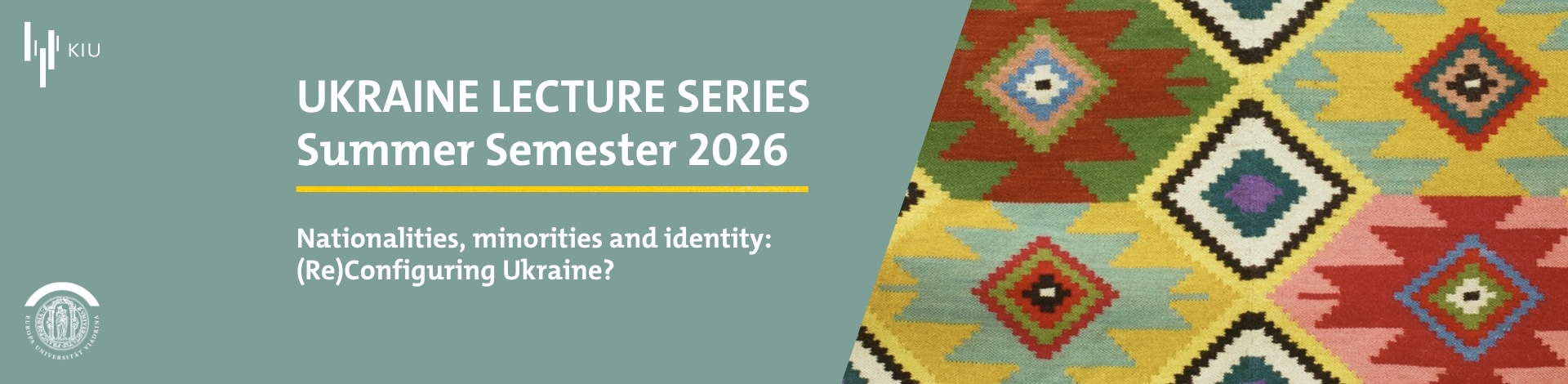
The new Ukraine Lecture Series for Summer Semester 2026 is here!
Minorities, nationalities, and identities constitute a vital element of Ukraine’s social and cultural fabric. The country comprises more than 100 ethnic groups, numerous national minorities, and three officially recognised indigenous peoples. Communities such as Crimean Tatars, Roma and Sinti, Hungarians, Romanians, and Jews contribute significantly to Ukraine’s multilingual and multicultural landscape.
Since 2014, and particularly after Russia’s full-scale invasion in 2022, minority groups have confronted increasing challenges related to displacement, security, and the safeguarding of human, social, and cultural rights. In territories under temporary Russian occupation, communities including the Crimean Tatars as well as the North Azovian Urums and Roumeans—whose 76 compact settlements in eastern Ukraine are now entirely occupied—face systematic persecution and violence. Many minorities struggle with the loss of homeland, the endangerment of their languages, and threats to their cultural heritage, while Roma communities experience continued marginalisation and persistent antiziganism.
In this lecture series, we will examine minorities, nationalities, and collective identity in Ukraine in both historical and contemporary perspectives. We will focus on the multifaceted impacts of culture, diversity, heterogeneity, resistance, self-empowerment, and transnational integration on Ukrainian identity. It will analyse how Russia’s invasion has further transformed this identity, revealing both the diversity of Ukrainian society and the resilience of a collective identity grounded in self-determination.
Share article: