


‘Documenting Atrocities: The Ukrainian Archive’ — Nataliia Gladkova
Monday, 16.11.2026, 4–6 p.m. | Hybrid format |In this lecture, Nataliia Gladkova, Programme Manager of Ukrainian Archive at Mnemonic, explores the role of digital open source archiving in documenting alleged human rights violations and international crimes committed during Russia’s war against Ukraine. Drawing on Ukrainian Archive’s collection of over 8 million digital records, the lecture examines how online content can be preserved, verified and used to support investigations, accountability and justice. It also addresses the challenges and limitations of open source documentation and its potential contribution to transitional justice in Ukraine.
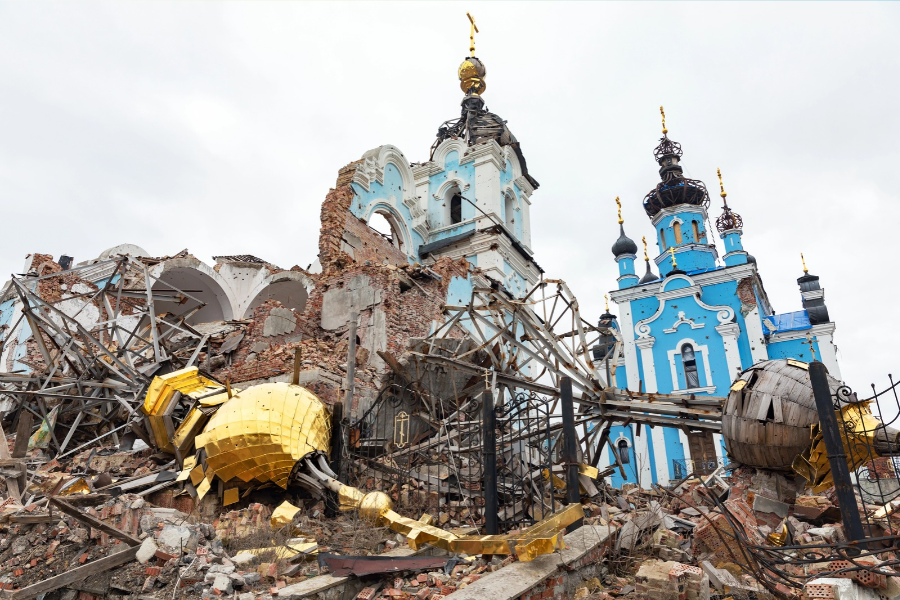
Accountability for the crimes committed in the context of Russia's war against Ukraine will depend, in part, on what is preserved today. Much of the record, especially from the occupied territories, exists only as videos, images and posts on social media, where it can be deleted within hours, either by alleged perpetrators or by the platforms themselves.
This lecture will present the work of Ukrainian Archive, a programme of Mnemonic, a Berlin-based non-profit organisation that archives digital open source documentation of human rights violations and international crimes in the Syrian Arab Republic, Yemen, the Sudan, the Occupied Palestinian Territory, the Islamic Republic of Iran and other conflict contexts.
Ukrainian Archive holds over 8 million digital open source records of alleged violations committed in the context of Russia's full-scale invasion since February 2022. The lecture will ask what it takes to turn online content into material that investigators, courts, journalists and historians can trust and rely on. It will follow the path from monitoring and preservation to verification and analysis, and will show how Ukrainian Archive, working with Ukrainian and international partners, helps to preserve memories, seek truth and advance justice, and what questions and barriers open source documenters face along the way.
The lecture will also be an invitation to a discussion on the role and the power of open source archiving. What can open source information contribute to transitional justice in Ukraine, and what can it not? What does it fail to see, whose experiences does it under-represent, and how far does it depend on the platforms that host it?
Nataliia Gladkova, Ukrainian Archive, Mnemonic. Programme Manager
Nataliia Gladkova is Programme Manager of Ukrainian Archive at Mnemonic, which preserves digital open source records documenting alleged human rights violations and international crimes committed in the context of Russia's war against Ukraine. Since June 2024 she has led its project portfolio and strategic development in close collaboration with Ukrainian and international civil society partners, supporting the team's monitoring, archiving, investigative and advocacy work to preserve memories, seek truth, and advance accountability and justice.
Share article: