

Mykola Riabchuk: Civicness by Default – Constructing Inclusive Nation against the Challenges of Exclusivity
MONDAY, 4 - 6 p.m. | Hybrid format I How did Ukraine build an inclusive civic nation while navigating deep political and cultural divides? In this talk, Mykola Riabchuk explores how compromise between competing elites, civil society, and contrasting nation-building models helped shape modern Ukraine’s multiethnic civic identity against persistent pressures of exclusivity.
Post-Soviet Ukraine has been generally defined as a hybrid regime that vacillated between unconsolidated democracy and unconsolidated authoritarianism, combining democratic principles and institutions at the normative level with authoritarian ‘basic instincts’ of ruling elites and all kinds of informal practices. Democracy in such countries survives not because it is strongly protected by functional institutions and secured by firm commitment of political class to rule of law, but just because the political field is fragmented and no political actor is strong enough to fully defeat the rivals and usurp the whole power. Political process remains competitive by default rather than due to the unequivocal adherence of major participants to rules and norms. The same peculiarity can be also discerned in the process of nation-building that the Ukrainian elites variously engaged in within the extremely complex and challenging process of ‘Quadruple transition’. Here, again, the liberal democratic (‘European’) rules and principles, broadly accepted at the normative level, clashed with particular, often the opposite, interests of different groups and the policies they prioritized. On the one side, there was the ruling post-Soviet, mostly Russian-speaking elite that retained all the political and economic power and strove to maintain the neocolonial status-quo (‘Belarusian model’) with the electoral support of the heavily Sovietized ‘silent majority’. On the other side, there was anti-Soviet, mostly Ukrainian-speaking democratic-cum-nationalist opposition that insisted on fast de-colonization (‘Baltic model’), drawing on the support of politically engaged, vociferous minority. Neither side could establish the full dominance and pursue its preferred policies thoroughly and coherently: the post-Soviet/oligarchic elite could rely on majority vote, state resources and institutions but their opponents had a viable alternative – the mobilized civil society that could rapidly stage street protests or, in some cases, even the revolution. Both sides, therefore, had to compromise, giving up on the both ‘Baltic’ and ‘Belarusian’ models and opting for the civic model of Ukrainian nation (as the second best option) – multiethnic but with Ukrainian cultural core. The compromise was difficult and painstaking but ultimately it resulted in emergence of modern, consolidated, self-confident civic nation that can be duly considered, against all odds, as a success story.
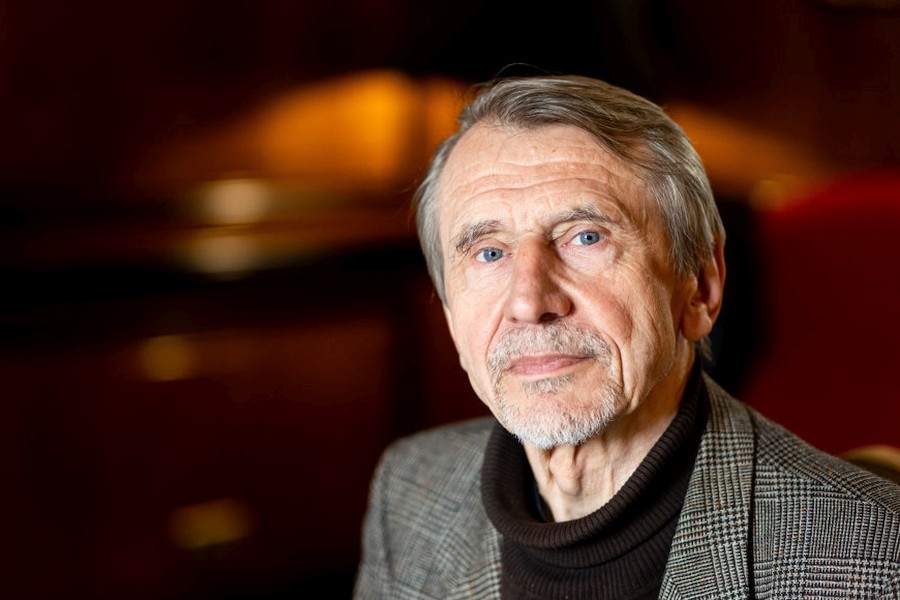 Mykola Riabchuk is a Principal Research Fellow at the Institute of Political and Ethnic Studies in Kyiv and a visiting lecturer at the University of Warsaw. He penned dozen books translated into Polish, French, German, Serbian and Hungarian, and was distinguished with several awards, most notably the Antonovych Prize (2003), the Order of Merit of the Republic of Poland (2025), and the Taras Shevchenko National Prize in Arts and Literature (2022). In 2014-2018, he headed the Ukrainian PEN Center and, in 2014-2023, chaired the jury of the ‘Angelus’ international literary award. His latest books (in English) are Eastern Europe since 1989: Between the Loosened Authoritarianism and Unconsolidated Democracy (2020), and At the Fence of Metternich’s Garden. Essays on Europe, Ukraine, and Europeanization(2021).
Share article: