

Yanush Panchenko: ‘Can a Roma serve in the military?’
MONDAY, 4–6 p.m. | Hybrid format | In this lecture, Yanush Panchenko examines the participation of Ukrainian Roma in the Russo-Ukrainian war as part of the Armed Forces of Ukraine. Drawing on ethnographic research, interviews with Roma servicemembers, and focus groups with civilian Roma communities, the lecture explores how Russia’s full-scale invasion has reshaped attitudes toward military service, law enforcement, and belonging. It asks how war transforms Romanipe — the traditional value system and ethnic self-awareness of Roma in Ukraine — and what these changes reveal about identity, solidarity, and participation under conditions of ongoing war.
This presentation reports the findings of a study on the participation of Ukrainian Roma in the Russo-Ukrainian war as part of the Armed Forces of Ukraine. The work is based on an approach that combines analysis of the experience of direct combat participants with an examination of public opinion among the civilian Roma population of Ukraine.
The study explores Roma participation in the war through several key aspects. The first is an analysis of the motives behind Roma joining the Ukrainian army, their personal combat experience, and their interactions with fellow soldiers. The second is the response of the civilian Roma population to their compatriots' participation in the war. Special attention is paid to the impact of Russia's full-scale invasion of 2022 on Romanipe – the traditional ethnic identity and self-awareness of Roma in Ukraine.
A central question of the study is the transformation of Ukrainian Roma attitudes toward the Ukrainian army. Prior to 2022, the Roma population distanced itself from military service and held deeply negative attitudes toward law enforcement structures, with service in such institutions ranking among the lowest in the Romani value system – Romanipe. In 2022, the authors (with Homanyuk) hypothesized that the full-scale war had brought about changes in Roma society's perception of law enforcement structures. This study tests that hypothesis by documenting the changes that occurred and analyzing the factors that influenced – or did not influence – the new attitude toward military service among Roma.
An important element of the work is a comparative analysis with the historical experience of Roma conscription into the Soviet Army during World War II. This comparison reveals common patterns and differences in the perception of military service, integration into the military environment, and the impact of war participation on ethnic identity.
The empirical base consists of in-depth semi-structured interviews with nine Roma servicemembers and three focus groups with the civilian Roma population. The study covers various sub-ethnic groups of Ukrainian Roma, and its wide geographical scope ensures the representativeness of the findings.
The methodology includes ethnographic observations conducted from June 2023 to June 2026, enabling the researchers to trace the dynamics of change in war perception and document everyday practices, discourses, and the evolution of relationships within Roma communities under conditions of ongoing war.
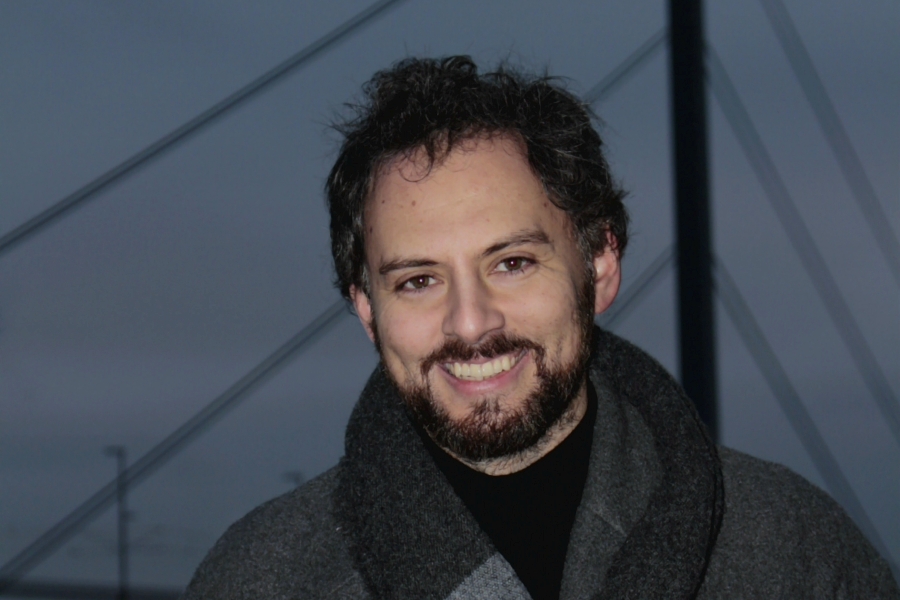 Yanush Panchenko is a Ukrainian ethnographer of Romani origin, researcher, and public figure specializing in the study of Romani culture, history, and language. He is a research associate at the Institute of Ethnology of the Czech Academy of Sciences.
His scholarly work encompasses several key areas. The first focuses on the nomadic lifestyle, traditional culture of Romani groups in Ukraine, as well as contemporary aspects of Romani traditional culture and the potential recognition of Romani groups in Ukraine as indigenous peoples. The second area concerns the Romani language: Yanush studies the Vlaxurya and Servurya dialects.
Since the onset of Russia's full-scale invasion of Ukraine, Yanush has been researching the migration of Ukrainian Roma and their adaptation to conditions of forced displacement, particularly within the EU. He also examines the impact of war on Romani traditional culture, the participation of Roma in the Russo-Ukrainian war, and the war's effect on the Romani value system – Romanipe.
Beyond his academic pursuits, Yanush is actively engaged in community work and informal education for Romani youth. He is the founder of Romano Than – Ukraine's first Romani youth center – and co-founder of the Ukrainian Center for Romani Studies. He is also the co-author of educational materials for Romani children and works on translating literature into the Romani language.
Share article: